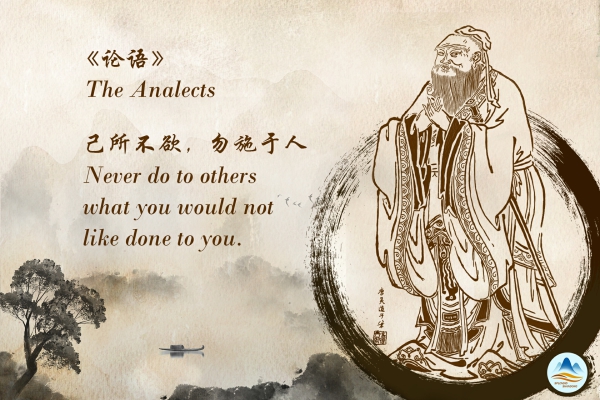
The Analects of Confucius
Introduction
The Analects of Confucius, also known simply as the Analects, is a collection of sayings and ideas attributed to the Chinese philosopher Confucius and his contemporaries. It is considered one of the central texts of Confucianism and has played a significant role in shaping Chinese culture and philosophy. The dialogues within the Analects emphasize personal and governmental morality, correctness of social relationships, justice, and sincerity.
Historical Context
The Analects, believed to have been compiled by Confucius' disciples, reflect his thoughts and conversations during the late Spring and Autumn period (770-476 BC). This era was marked by fragmentation and social upheaval, which Confucius sought to address through his philosophy of ethical governance and personal morality.
Structure and Themes
The Analects of Confucius is a collection of dialogues and sayings attributed to the Chinese philosopher Confucius and his disciples. The work is structured as a series of brief passages, often presented as conversations or reflections, each encapsulating the teachings and philosophical insights of Confucius. The text is divided into 20 books, or chapters, each dealing with different aspects of Confucian thought.
The primary themes of The Analects revolve around Confucius' vision of ethical and moral conduct, which is rooted in the concepts of ren (benevolence or humaneness), li (ritual or propriety), and xiao (filial piety). These themes are explored through the interactions between Confucius and his disciples, as well as through anecdotes and teachings that emphasize the development of personal virtue and the importance of social harmony.
One of the central tenets of Confucian philosophy is the cultivation of virtue through self-discipline and continuous learning. Confucius advocates for the importance of education and the lifelong pursuit of knowledge as a means of self-improvement. This is reflected in his belief that individuals should constantly strive to better themselves and their communities, fostering a society rooted in ethical behavior and mutual respect.
The Analects also emphasizes the significance of proper governance and the role of the ruler in setting a moral example for the people. Confucius posits that a just and benevolent ruler, who adheres to the principles of ren and li, can inspire the same qualities in their subjects, leading to a well-ordered and harmonious society. This concept aligns with Confucian ideals of leadership, where moral integrity and virtuous conduct take precedence over mere authority or power.
Additionally, the theme of xiao, or filial piety, underscores the importance Confucius places on familial relationships and respect for one's elders. He argues that the family serves as the foundational unit of society, and that harmonious family relations contribute to the stability and moral fiber of the larger community.
Influence and Legacy
The Analects has influenced Chinese culture and society for centuries, shaping the educational system and the moral framework within which Chinese society operates. Confucian ideals of hierarchy, respect, and familial loyalty continue to resonate within modern Chinese culture. The text has also impacted other East Asian countries, including South Korea, Japan, and Vietnam, where Confucian values have been integrated into their cultural and philosophical traditions.
Modern Interpretations and Studies
In recent years, The Analects of Confucius has been the subject of renewed interest, both in academic circles and popular culture. New translations and interpretations continue to emerge, making the teachings of Confucius accessible to a global audience. Modern scholars explore the relevance of Confucian philosophy in contemporary issues such as governance, ethics, and education. Photo Gallery(7 pictures)CategoriesChinese PhilosophyTagClassics of Chinese StudiesHistorical FiguresRelatedThe Four BooksThe Thousand Character ClassicCentral Plains CultureZhu XiCatalogue1. Introduction2. Historical Context3. Structure and Themes4. Influence and Legacy5. Modern Interpretations and Studies- - - []








